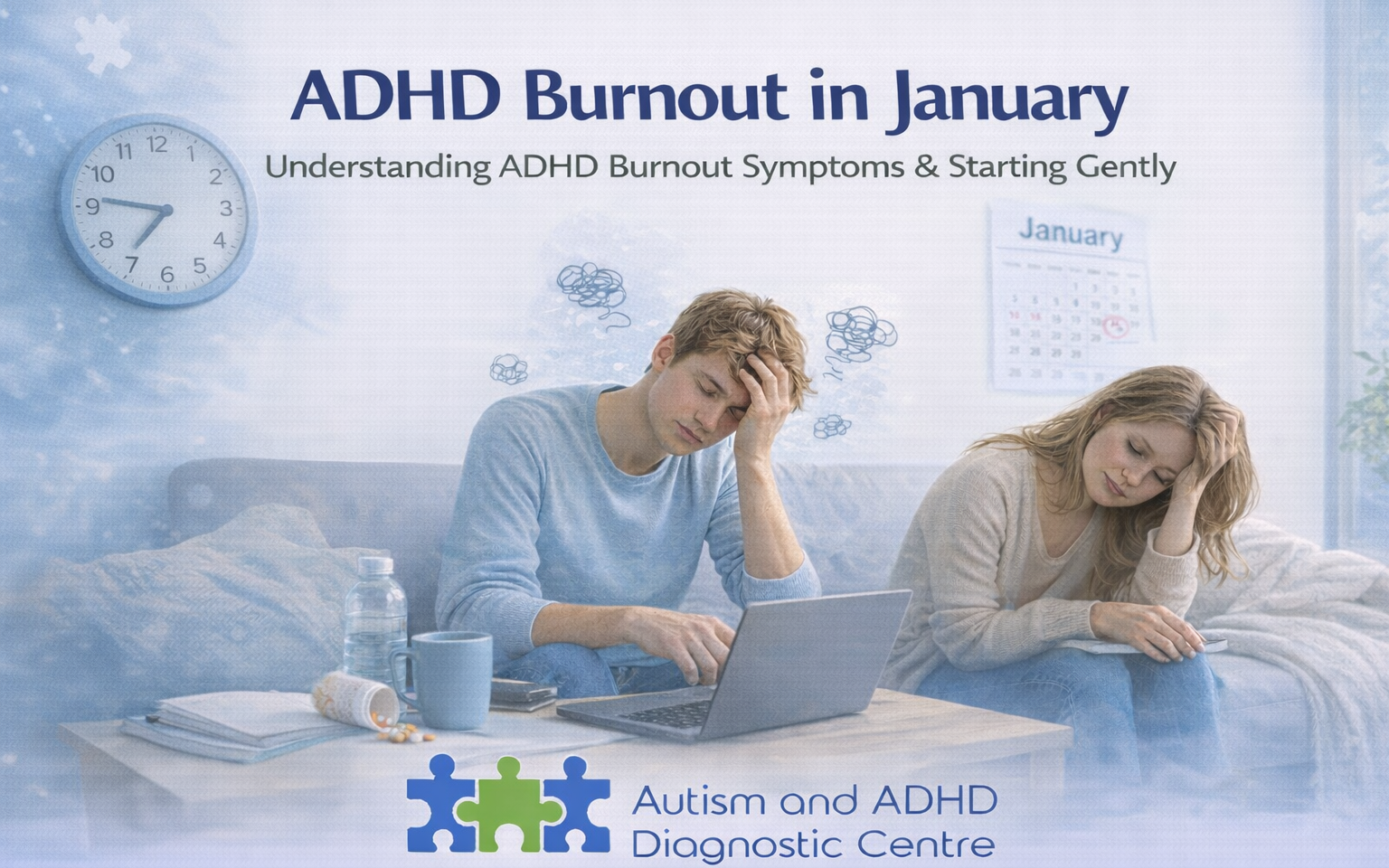
ADHD Burnout in January: Understanding ADHD Burnout Symptoms and Starting Gently
January can be hard if you are living with ADHD or autism.
Many adults with ADHD experience burnout at the start of the year. Autistic people often report similar mental and physical exhaustion, anxiety, and shutdown. After the disruption of December, pressure to reset and improve can make ADHD burnout symptoms feel stronger rather than easier to manage.
This guide is for:
- Adults with ADHD
- Autistic adults
- People supporting someone with ADHD or autism
You do not need to read everything at once. You can skim. You can stop. You can come back later.
Why ADHD Burnout Often Feels Worse in January
January brings together several factors that can lead to burnout.
NHS England guidance on winter wellbeing notes that shorter days and reduced daylight can worsen mood, motivation, and energy levels (NHS England, 2023). Seasonal low mood affects many adults, including those who do not usually struggle with mental health.
For people with ADHD, this seasonal dip often interacts with:
- Ongoing stress
- Executive function difficulties
- Comparison and performance pressure
Together, these factors increase the risk of ADHD burnout, particularly after a demanding festive period.
Understanding ADHD, Routine, and Anxiety in Autistic People
Understanding ADHD and autism together matters when talking about burnout.
The National Autistic Society reports that anxiety affects around half of autistic people and can significantly impact daily life (National Autistic Society, 2018). Many autistic people rely on routine to manage uncertainty and sensory input.
January often disrupts routine through:
- New expectations
- Changes in daily structure
- Pressure to do things differently
For autistic nervous systems, this can increase anxiety and contribute to autistic burnout, especially when recovery time has been limited.
Executive Function Difficulties and Symptoms of ADHD Burnout
An NHS guide to adult ADHD explains that executive functions include planning, starting tasks, focusing attention, switching between tasks, and monitoring progress (Leicestershire Partnership NHS Trust, 2022).
When executive function is under strain, everyday demands take more effort. January goals that rely on planning, time management, and sustained motivation can quickly become overwhelming.
Common symptoms of ADHD burnout include:
- Mental and physical exhaustion
- Difficulty starting tasks
- Avoidance
- Emotional overload
These are signs of nervous system overload, not lack of effort.
The ADHD Burnout Cycle and Causes of ADHD Burnout
Many adults with ADHD experience burnout repeatedly.
This often follows a familiar burnout cycle:
- High expectations
- Over-effort and pressure
- Exhaustion and shutdown
- Self-criticism and avoidance
- Renewed pressure to try harder
Clinical writing on ADHD highlights all-or-nothing thinking and perfectionism as contributing factors. These patterns can be causes of ADHD burnout, particularly when combined with long-term masking and comparison.
Autistic people may experience similar cycles driven by fear of failure and anxiety (National Autistic Society, 2018).
Burnout, Masking, and Mental and Physical Exhaustion
South London and Maudsley NHS describes autistic burnout as a state of severe mental and physical exhaustion that can include loss of skills, increased sensory sensitivity, and reduced tolerance for everyday demands (SLAM NHS, 2023).
Burnout often follows prolonged masking and coping without enough recovery.
December places additional social and sensory demands on many people. January then arrives before energy has returned, increasing the likelihood of burnout and shutdown.
Managing ADHD Burnout With Gentle Rhythms
Managing ADHD burnout often requires slowing down rather than pushing harder.
Instead of rigid resolutions, many adults with ADHD benefit from gentle rhythms. These are supportive patterns that help manage ADHD without adding pressure.
Examples include:
- One steady anchor in the day
- A loose weekly structure
- Planning around energy rather than time
Autism-specific guidance shows that predictable routines reduce anxiety and support regulation (Beyond Autism, 2023). These approaches can help prevent burnout rather than reinforce it.
Recover From Burnout Without Rushing
Recovering from burnout takes time.
You do not need to optimise January.
You do not need to fix everything at once.
Rest is not failure. Stability supports recovery.
Allowing yourself to recover from burnout slowly can help break the burnout cycle and reduce future relapse.
Living With ADHD or Autism
Living with ADHD often means carrying invisible effort.
Many adults with ADHD report burnout after years of compensating, masking, and pushing through difficulties. Autistic adults often describe similar patterns of exhaustion.
You are allowed to:
- Lower expectations
- Reduce demands
- Rebuild routines gradually
You do not need to earn rest.
Supporting Someone With ADHD or Autism
If you support someone with ADHD or autism, encouragement can sometimes feel like pressure.
Anxiety guidance for autistic people emphasises reducing uncertainty, avoiding sudden changes, and involving the person in decisions about what feels manageable (National Autistic Society, 2018; Beyond Autism, 2023).
Supportive approaches include:
- Avoiding surprise plans
- Giving time to prepare
- Asking what feels supportive
These steps can help break the cycle of burnout rather than intensify it.
ADHD and Burnout: When Bigger Questions Arise
Burnout can highlight long-standing patterns, such as chronic exhaustion, difficulty organising daily life, or constant masking.
The NHS recognises that ADHD and autism often persist into adulthood, and many adults seek assessment later after noticing these patterns (NHS, 2022).
Assessment is about understanding needs, not judgment.
FAQ
1. What are the signs of ADHD burnout?
Signs of burnout include mental and physical exhaustion, difficulty starting tasks, emotional overload, and feeling unable to cope with everyday demands.
2. Can women with ADHD experience burnout differently?
Yes. Women with ADHD often report burnout linked to long-term masking, perfectionism, and unmet support needs.
3. How can I help prevent burnout?
Reducing pressure, maintaining predictable routines, and allowing recovery time can help prevent burnout.
How AADC Helps People With ADHD and Autism
Best-practice guidance recommends multi-disciplinary assessment using validated tools alongside clinical judgement.
AADC provides structured assessments for children and adults with ADHD and autism, offering clear reports and practical recommendations. Support continues beyond diagnosis, helping individuals and families understand their experiences and manage challenges sustainably.
AADC CARES – Pathway to Understanding